Education for Modern Pet Professionals
“We can provide better handling — and dogs deserve that we do.” — Ashley Hanvey
“We can provide better handling — and dogs deserve that we do.” — Ashley Hanvey

Respect Centered Handling
The art of Connecting to the Dogs on our Grooming Tables
Coming in Q4 2026
Respect the Dog in Front of You
Dogs do not arrive on our tables as blank slates.
They arrive with nervous systems shaped by genetics, gestation, early handling, fear periods, hormones, health, and lived experience.
Respect-Centered Handling is not strictly a “Handling style.”
It is a professional responsibility.
If we want safer grooming, better outcomes, fewer injuries, fewer headlines, and dogs who can tolerate care across their lifetime, we must commit to handling that is developmentally informed, emotionally aware, and ethically grounded.


What is the Respect Centered Handling Program about?
First we start with the “WHY”:
-
Humans Should Learn to Listen examines the human side of the dog–human partnership. Humans and dogs came together thousands of years ago for mutual benefit, working alongside one another to survive and thrive. Today, many dogs have shifted from active partners to sedentary companions, often mislabeled as “living the life of luxury.”
In reality, many dogs are quietly struggling—not because of who they are, but because of how we shape their lives. This course challenges us to look inward, exploring how human choices, behaviors, and expectations influence canine wellbeing. By learning about ourselves, we can begin rebuilding a relationship rooted in understanding, respect, and responsibility.
-
Dogs Are More Than Hair explores how dogs have evolved alongside humans over thousands of years, learning to read our emotions, routines, and lives with remarkable accuracy. They have become irreplaceable members of our families. But have we devoted the same care and attention to learning how to read them?
As society continues to evolve, we are finally pausing to look back at the loyal companions who have always been by our sides. This course invites us to deepen our understanding of dogs as sentient beings with emotional, behavioral, and relational needs, and challenges us to honor them not just for how they look, but for who they are and all they have given us.
-
A Timeline of Behavior introduces a framework for understanding how experiences across time influence a dog’s behavior in the grooming environment. This course examines the factors that shape behavior before a grooming appointment, what occurs during the appointment itself, and the potential effects dogs may experience after they leave our care.
While it is impossible to account for every individual scenario, this course explores a broad range of influences and outcomes, helping professionals better recognize patterns, anticipate challenges, and make informed, compassionate handling decisions.
Then we can learn the “HOW”:
-
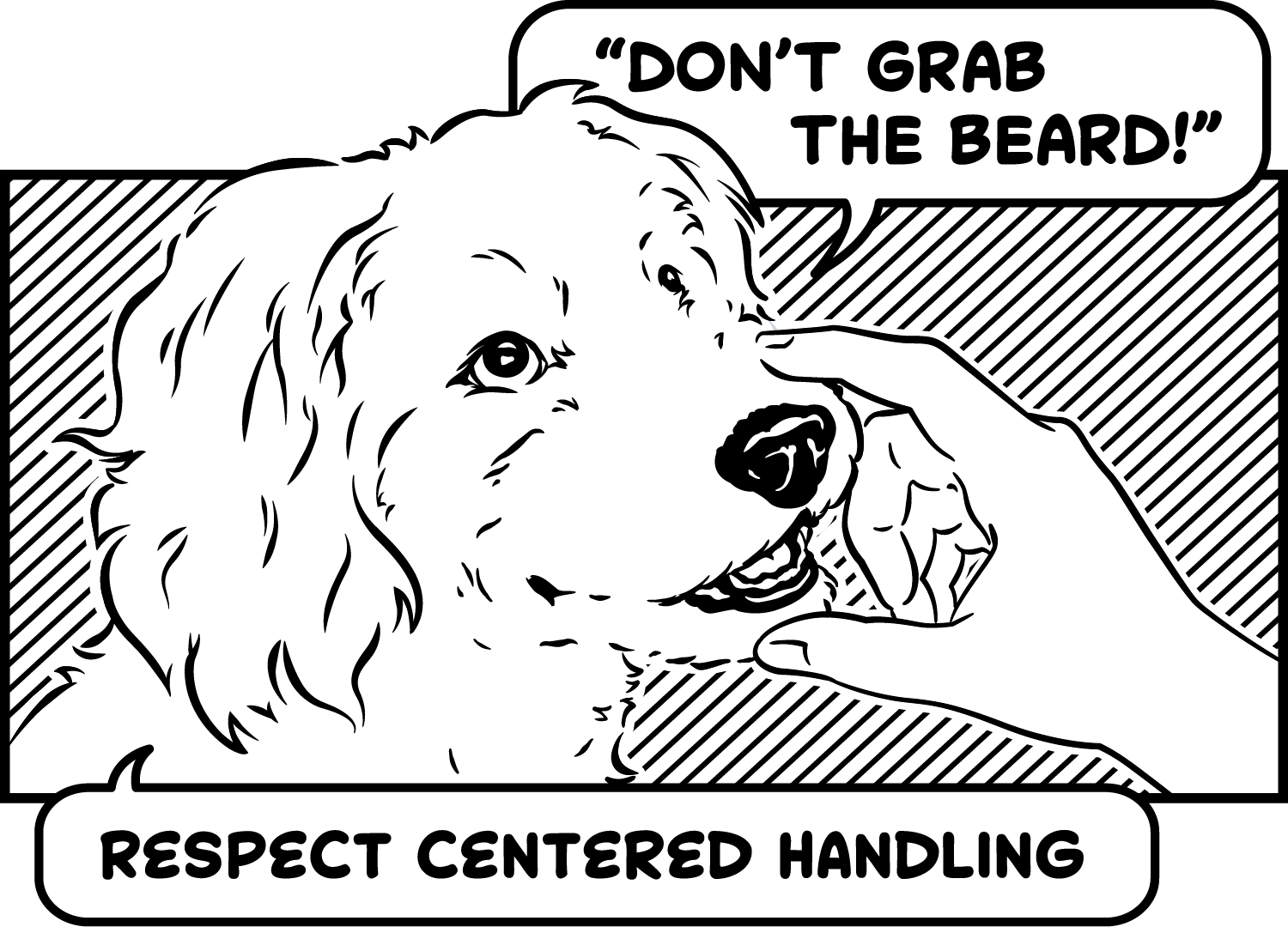
Don’t Grab the Beard: Advanced Handling is a deep dive into the concepts introduced in the original course, expanding them with new handling footage and refined techniques. Traditional grooming prioritized speed and results—getting the haircut done, regardless of how the dog experienced the process. Today, advances in science and behavior tell a different story.
This advanced course explores alternative, more respectful ways to support and hold a dog’s face while grooming, building on the foundational principles of Don’t Grab the Beard. Through updated discussion and new handling videos, groomers are challenged to refine their skills, improve dog comfort and safety, and adapt their techniques to align with modern, welfare-centered grooming practices.
-
Respect-Centered Handling for the Modern Dog Groomer brings together the core concepts from previous courses and translates them into practical, hands-on application at the grooming table. This course explores how respectful handling can be adapted across all life stages and evaluated through a L.E.G.S.®-informed lens, considering genetics, environment, learning history, and self.
Students are introduced to Ashley’s Handling Style Profile, alongside a range of other handling profiles, to help groomers identify approaches that align with both the dog in front of them and the professional providing care. Practical handling techniques, industry tools, and decision-making strategies are covered in depth, supported by real-world case studies that walk through assessment, adaptation, and outcomes for individual dogs.
This course is designed to help groomers move beyond rigid methods and toward thoughtful, flexible handling that prioritizes safety, communication, and canine wellbeing.
-
Bonus courses are planned as well as suggestions for additional courses and learning, through books, programs and more!
Learning never ends.